
Showing posts with label places. Show all posts
Showing posts with label places. Show all posts
Monday, July 30, 2012
Red Rocks - Arizona - United States of America
Thanks for visiting! Use the RSS feed or e-mail subscription to keep up to date on what's happening on this site.
The amazing Red Rocks located in the city of Sedona in the state of Arizona, USA. These rocks are popular because of their incredibly vibrant red glow they exhibit at sunrise & sunset.
.jpg)

Saturday, March 24, 2012
Top 10 Places to Visit in Sweden
Thanks for visiting! Use the RSS feed or e-mail subscription to keep up to date on what's happening on this site.
Stockholm
Stockholm is widely celebrated not only as the capital of Scandinavia, but also as one of the world’s most beautiful cities, built where lake meets sea, on fourteen islands, with ten centuries of history and culture. The Swedish Royal Capital is also widely known for its remarkable modernity, progressiveness and trend sensitivity in everything from lifestyle to fashion, design, food and drink and usage of new technology. The combination of magnificent scenery, ancient history and tradition, and a pervasive innovative spirit combine to give Stockholm its truly exceptional character and charm.

Friday, January 14, 2011
Top Ten Best Places To Live In 2011
Thanks for visiting! Use the RSS feed or e-mail subscription to keep up to date on what's happening on this site.
2011 has just begun with many New Year resolutions and plans as we all are hoping for a brighter & better future. If you plan to shift to some better place, this list is your guide. This list ranks 10 cities out of 221 as the Top Ten Best Places To Live In 2011. The cities were evaluated on 39 factors including economic, political, environmental, health, personal safety, education, transportation and other public service factors. Cities were compared to New York City which was given a base score of 100. Vienna tops the list of top 10 with an index of 108.6. You can also see top ten places to live in the World for all time.
Best Places To Live
1. Vienna, Austria

Vienna, Austria tops the list and stands at #1 as the best place in the world to live with a Mercer score of 108.6. Vienna is Austria’s Capital. It is its cultural, economic, and political center with a population of about 1.7 million. The city has it’s own unique colors. Vienna experiences 4 season in an year with a mild summer season and a rather windy and rainy winter season. GDP of Austria is $361.791 billion. Vienna has an extensive transportation system and a very reliable health system. The country’s political stability also makes it a place worth living. Life expectancy in Vienna is 79.5 years.
Wednesday, August 11, 2010
Extremely Romantic Places to Get Married
Thanks for visiting! Use the RSS feed or e-mail subscription to keep up to date on what's happening on this site.
If you are planning to get married shortly, are 200% sure of your love, and are ready to overcome hardships together with your partner, this post is for you. We’re going to show you 13 of the most extreme and romantic places to get married! What makes them even more attractive is the fact that most likely your relatives won’t even want to join you on your special occasion. Besides, the cool and unforgettable honeymoon is guaranteed — well, of course if you manage to survive.

1. Inside a cage on a shark reef
Photo by StJennaWednesday, July 21, 2010
Top Ten Places to Live in the World
Thanks for visiting! Use the RSS feed or e-mail subscription to keep up to date on what's happening on this site.
There are many factors that make the place we live the place we love to call home. Environment, weather, history, politics, economy, infrastructure, social climate, and entertainment all play a part. When choosing a place to live, your decision should be based on what issues are important to you. Finding the right combination of features is the key to loving where you live.
Healthcare and Tolerance – Amsterdam, The Netherlands

In 2009 the Netherlands was named as having the best healthcare system in Europe by the Euro Health Consumer Index. Six criterion examined were patient rights and information, e-health, waiting times for treatment, outcomes, range and reach of services provided and pharmaceuticals. The Netherlands is additionally praised for its minimal bureaucracy and patient empowerment.
The Netherlands, particularly Amsterdam, has become infamous for its tolerance of the taboo. The Dutch believe that people should make moral decisions with little interference from government. Marijuana is legal. Tattoo parlors, sex shops, and the red light district draw tourists. Hostels are packed during the peak summer season.
As far as culture, there are famous museums where you can see work by Van Gogh, Vermeer, and Rembrandt. One can learn the story of Anne Frank, relax in beautiful parks and ride a bike almost anywhere. According to Claudio.Ar, “It is said that Amsterdam has more canals than Venice, more cafes than Vienna and more bridges than Paris. The tours let you discover them and other secrets of the city.”
Healthcare and Tolerance – Amsterdam, The Netherlands
Meuse River, The Netherlands
The Netherlands, particularly Amsterdam, has become infamous for its tolerance of the taboo. The Dutch believe that people should make moral decisions with little interference from government. Marijuana is legal. Tattoo parlors, sex shops, and the red light district draw tourists. Hostels are packed during the peak summer season.
As far as culture, there are famous museums where you can see work by Van Gogh, Vermeer, and Rembrandt. One can learn the story of Anne Frank, relax in beautiful parks and ride a bike almost anywhere. According to Claudio.Ar, “It is said that Amsterdam has more canals than Venice, more cafes than Vienna and more bridges than Paris. The tours let you discover them and other secrets of the city.”
Saturday, June 26, 2010
Most Remote Place on Earth
Thanks for visiting! Use the RSS feed or e-mail subscription to keep up to date on what's happening on this site.
Probably as far away as possible! Short of launching him into space, consider this island - the most remote inhabited location on the planet. There are other distant places, but they are uninhabited, mostly barren and unexciting - but here life is established in a very British way, so our world-leader-in-exile would not mess it up so easily, one hopes.


(images credit: 1, 2)
Tristan da Cunha, the Loneliest Island on Earth
When Napoleon was sent to St. Helena by the British, they annexed the closest chain of islands to prevent the French from attempting to rescue him. After all, who wouldn't travel a mere 2430 km over rough and hostile seas in order to rescue the Emperor himself? Yes, that's right, the islands of Tristan Da Cunha closest neighboring land mass, the island of St. Helena, is 2430 km away.

The island is so small that cartographers can't even put it on their maps (not enough resolution). Located in the South Atlantic between Africa and South America, this volcanic outcropping has the honor of being the remotest inhabited island on the planet, and that's including Antarctica and the North Pole. One of the islands in the archipelago is called "Inaccessible", which only seems appropriate, together with their motto: "Our faith is our strength"

Maps Courtesy of Jean-Pierre Langer of Monaco
Capital: Edinburgh of the Seven Seas
Language: English, Population - barely 300 people.
Religions: Christianity (Anglican and Roman Catholic)
Monetary Unit: Pound Sterling (GBP)

(images credit: Manuel Bauer)
Tristan Da Cunha is home to a population of 270 very isolated people, with an economy based in the fishing industry. The climate is sub-tropical, with very little variation in temperature from season to season, and it would probably be a pleasant place to stay... if there were more arable land: the only sort-of level bit of land is located at the northwestern edge of the island, and the rest is moutainous and rocky.

(images credit: Peter Balwin and Sue Scott)
The group of islands is a huge volcanic formations which rose out of the South Atlantic about a million years ago. They are located on the edge of the caldera of the very active volcano! In 1961 a cone near the town, Edinburgh of the Seven Seas, began to erupt and the whole community was evacuated to England. After 2 years, an investigation was conducted and it was found that damage was minimal and the residents were allowed to return.


(photos courtesy Rob Crossan & Simon Dunston and Sue Scott)
The islanders frequently face the full wrath of Atlantic storms: the gusts of wind of almost 190km per hour once were so strong that they swept the grazing cows and sheep from the fields and into the ocean... Think about looking out of your window and seeing woefully mooing bovines sailing past... perishing in the waves...
Refreshment - away from the maddening crowds
Islands of Refreshment, this is how self-proclaimed ruler (remember our little "despot" joke in the beginning?) Jonathan Lambert called these islands in 1811. "Lambert declared himself sovereign and sole possessor of the island group", but he did not last long, as he drowned while fishing a year later.
And here are the "refreshments" - Genuine Tristan Lobster Tails - the tastiest in the world!

(image credit: Roland Svensson)
"The island now boasts a convenience store, a radio station (broadcasting the World Service four days a week), a cafe, a video shop and a swimming pool. Tristan is now connected to the world by one telephone and a fax machine in the Administrator's office, and is visited once a year by the only mail ship in the world, the RMS St. Helena. This ship brings not only mail, but canned food, videos, books and magazines, medical items, and the occasional visitor." (source)

(images credit: sthelena.se)

(images credit: Manuel Bauer)

(images credit: Rob Crossan)
"Unemployment on Tristan is almost unknown, with both girls and boys guaranteed jobs when they leave school, even if posts have to be specially created for them. In recent times, girls have increasing started to continue their education (usually at St. Helena) - young women are increasingly becoming an intellectual elite on the island."

(images credit: sthelena.se)
Here is another kind of native: yellow-nosed albatross chick -

(photo courtesy Sue Scott)
and you might recognize this character ( Northern rock-hopper penguin, made popular by "Surf's Up" animated movie ) - 90% of the world population breed on Tristan:

(photo courtesy Sue Scott)
For an intrepid explorer of "abandoned & haunted places", there is something as well
- the whole abandoned and grounded oil rig!

(photo courtesy Sue Scott)
(images credit: 1, 2)
Tristan da Cunha, the Loneliest Island on Earth
When Napoleon was sent to St. Helena by the British, they annexed the closest chain of islands to prevent the French from attempting to rescue him. After all, who wouldn't travel a mere 2430 km over rough and hostile seas in order to rescue the Emperor himself? Yes, that's right, the islands of Tristan Da Cunha closest neighboring land mass, the island of St. Helena, is 2430 km away.
The island is so small that cartographers can't even put it on their maps (not enough resolution). Located in the South Atlantic between Africa and South America, this volcanic outcropping has the honor of being the remotest inhabited island on the planet, and that's including Antarctica and the North Pole. One of the islands in the archipelago is called "Inaccessible", which only seems appropriate, together with their motto: "Our faith is our strength"
Maps Courtesy of Jean-Pierre Langer of Monaco
Capital: Edinburgh of the Seven Seas
Language: English, Population - barely 300 people.
Religions: Christianity (Anglican and Roman Catholic)
Monetary Unit: Pound Sterling (GBP)
(images credit: Manuel Bauer)
Tristan Da Cunha is home to a population of 270 very isolated people, with an economy based in the fishing industry. The climate is sub-tropical, with very little variation in temperature from season to season, and it would probably be a pleasant place to stay... if there were more arable land: the only sort-of level bit of land is located at the northwestern edge of the island, and the rest is moutainous and rocky.
(images credit: Peter Balwin and Sue Scott)
The group of islands is a huge volcanic formations which rose out of the South Atlantic about a million years ago. They are located on the edge of the caldera of the very active volcano! In 1961 a cone near the town, Edinburgh of the Seven Seas, began to erupt and the whole community was evacuated to England. After 2 years, an investigation was conducted and it was found that damage was minimal and the residents were allowed to return.
(photos courtesy Rob Crossan & Simon Dunston and Sue Scott)
The islanders frequently face the full wrath of Atlantic storms: the gusts of wind of almost 190km per hour once were so strong that they swept the grazing cows and sheep from the fields and into the ocean... Think about looking out of your window and seeing woefully mooing bovines sailing past... perishing in the waves...
Refreshment - away from the maddening crowds
Islands of Refreshment, this is how self-proclaimed ruler (remember our little "despot" joke in the beginning?) Jonathan Lambert called these islands in 1811. "Lambert declared himself sovereign and sole possessor of the island group", but he did not last long, as he drowned while fishing a year later.
And here are the "refreshments" - Genuine Tristan Lobster Tails - the tastiest in the world!
(image credit: Roland Svensson)
"The island now boasts a convenience store, a radio station (broadcasting the World Service four days a week), a cafe, a video shop and a swimming pool. Tristan is now connected to the world by one telephone and a fax machine in the Administrator's office, and is visited once a year by the only mail ship in the world, the RMS St. Helena. This ship brings not only mail, but canned food, videos, books and magazines, medical items, and the occasional visitor." (source)
(images credit: sthelena.se)
(images credit: Manuel Bauer)
(images credit: Rob Crossan)
"Unemployment on Tristan is almost unknown, with both girls and boys guaranteed jobs when they leave school, even if posts have to be specially created for them. In recent times, girls have increasing started to continue their education (usually at St. Helena) - young women are increasingly becoming an intellectual elite on the island."

(images credit: sthelena.se)
Here is another kind of native: yellow-nosed albatross chick -

(photo courtesy Sue Scott)
and you might recognize this character ( Northern rock-hopper penguin, made popular by "Surf's Up" animated movie ) - 90% of the world population breed on Tristan:
(photo courtesy Sue Scott)
For an intrepid explorer of "abandoned & haunted places", there is something as well
- the whole abandoned and grounded oil rig!
(photo courtesy Sue Scott)
Friday, May 21, 2010
10 Most Endangered Places in the World
Thanks for visiting! Use the RSS feed or e-mail subscription to keep up to date on what's happening on this site.


Monday, April 26, 2010
Bora Bora, French Polynesia
Thanks for visiting! Use the RSS feed or e-mail subscription to keep up to date on what's happening on this site.

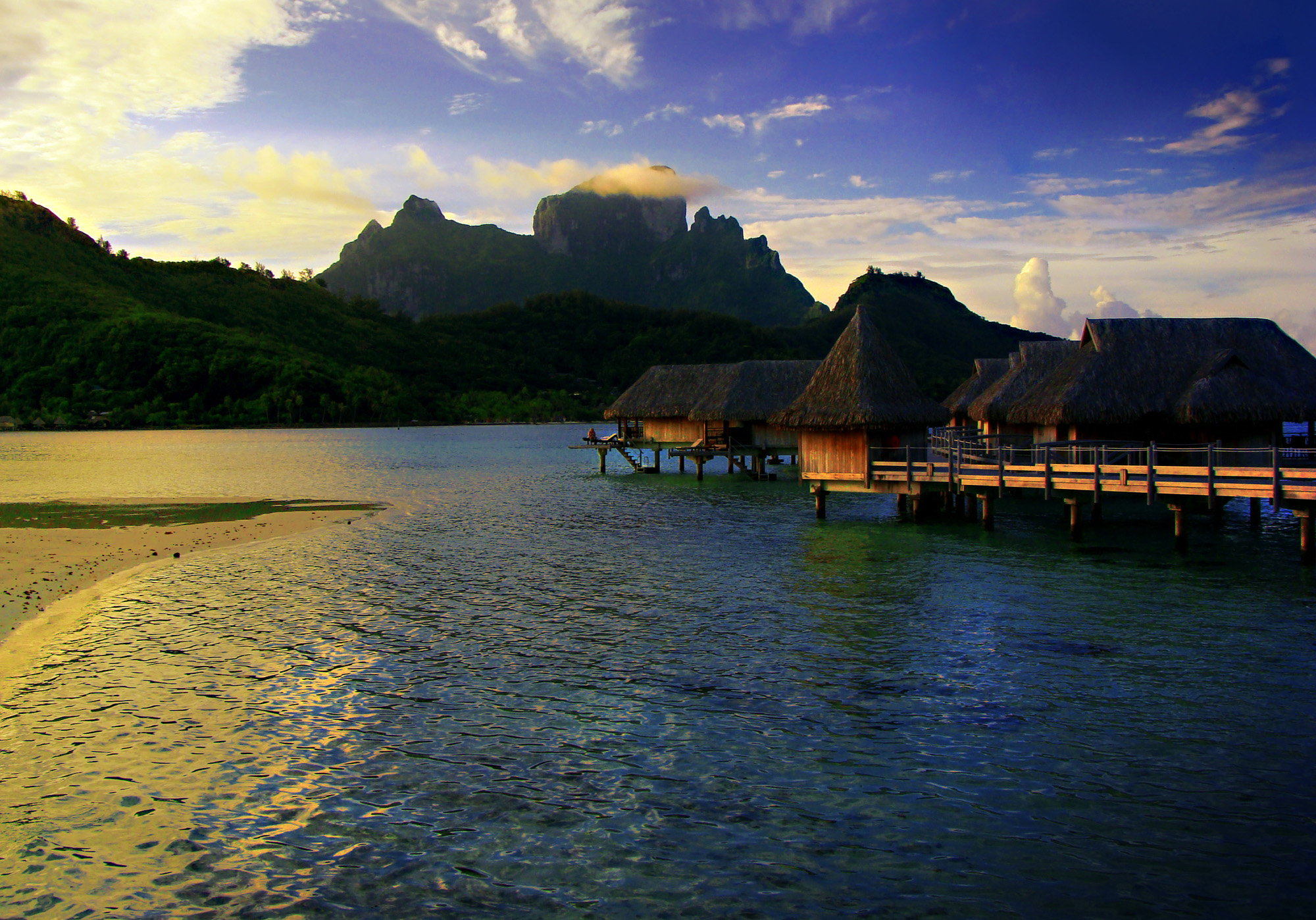
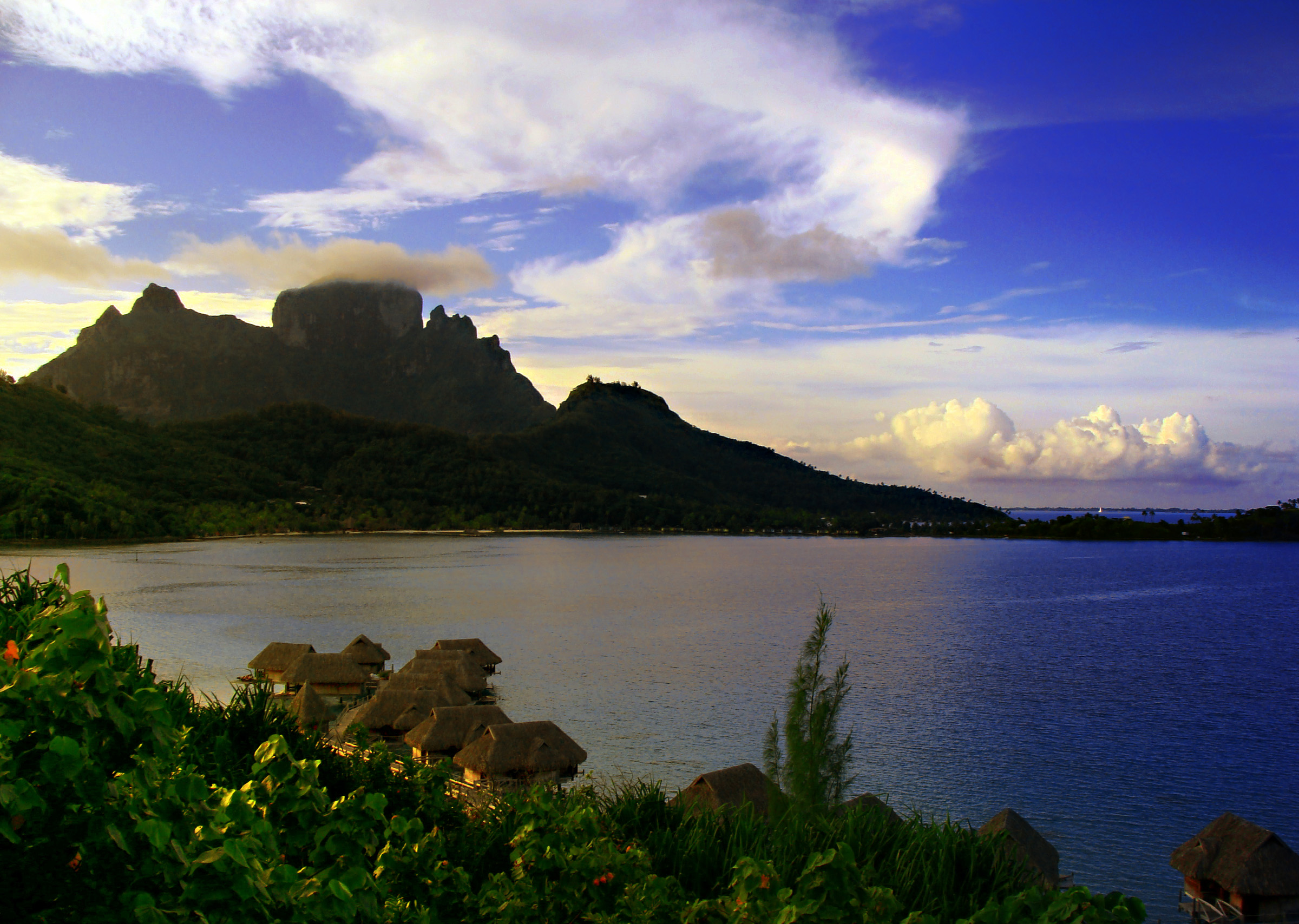
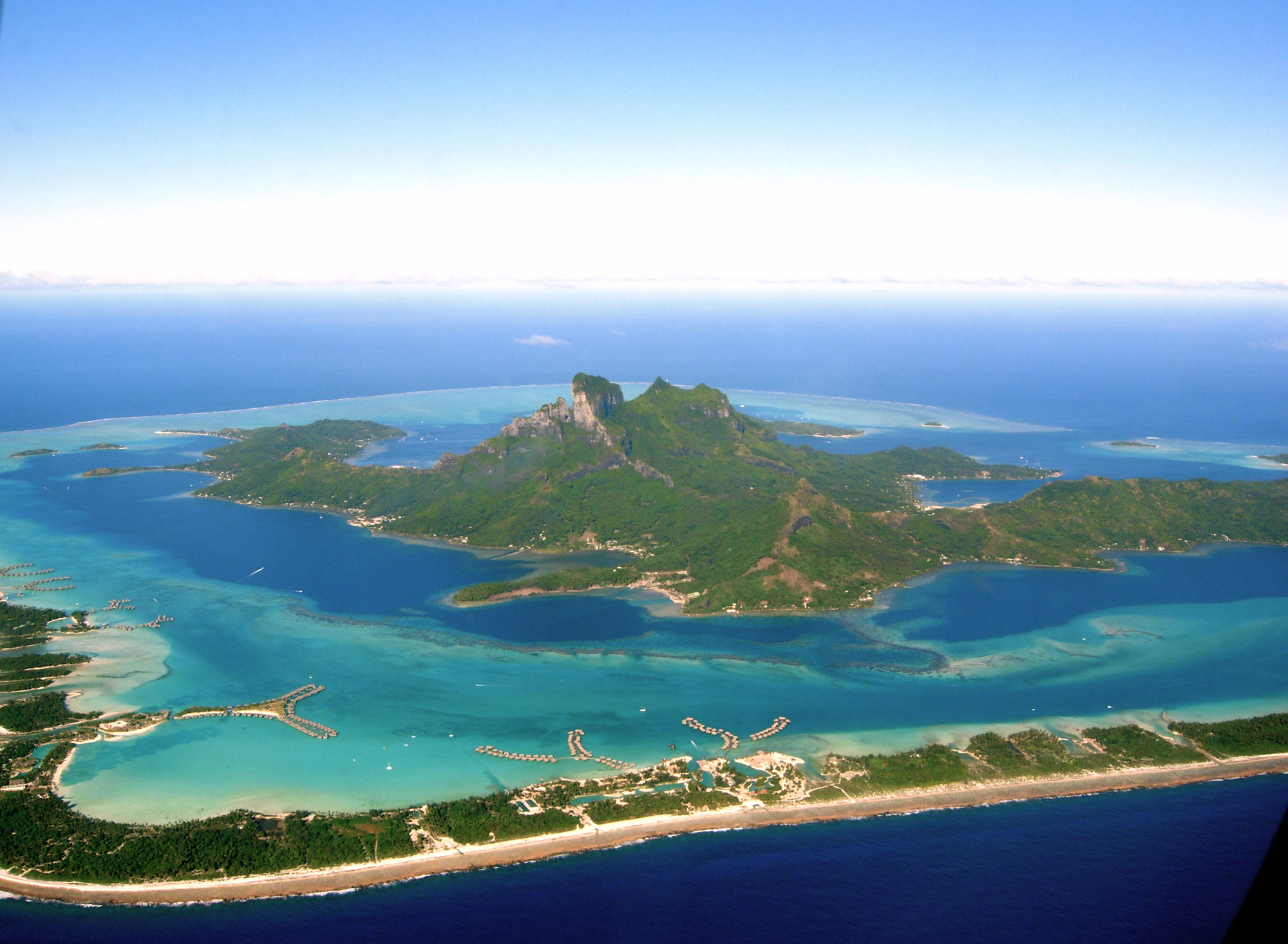
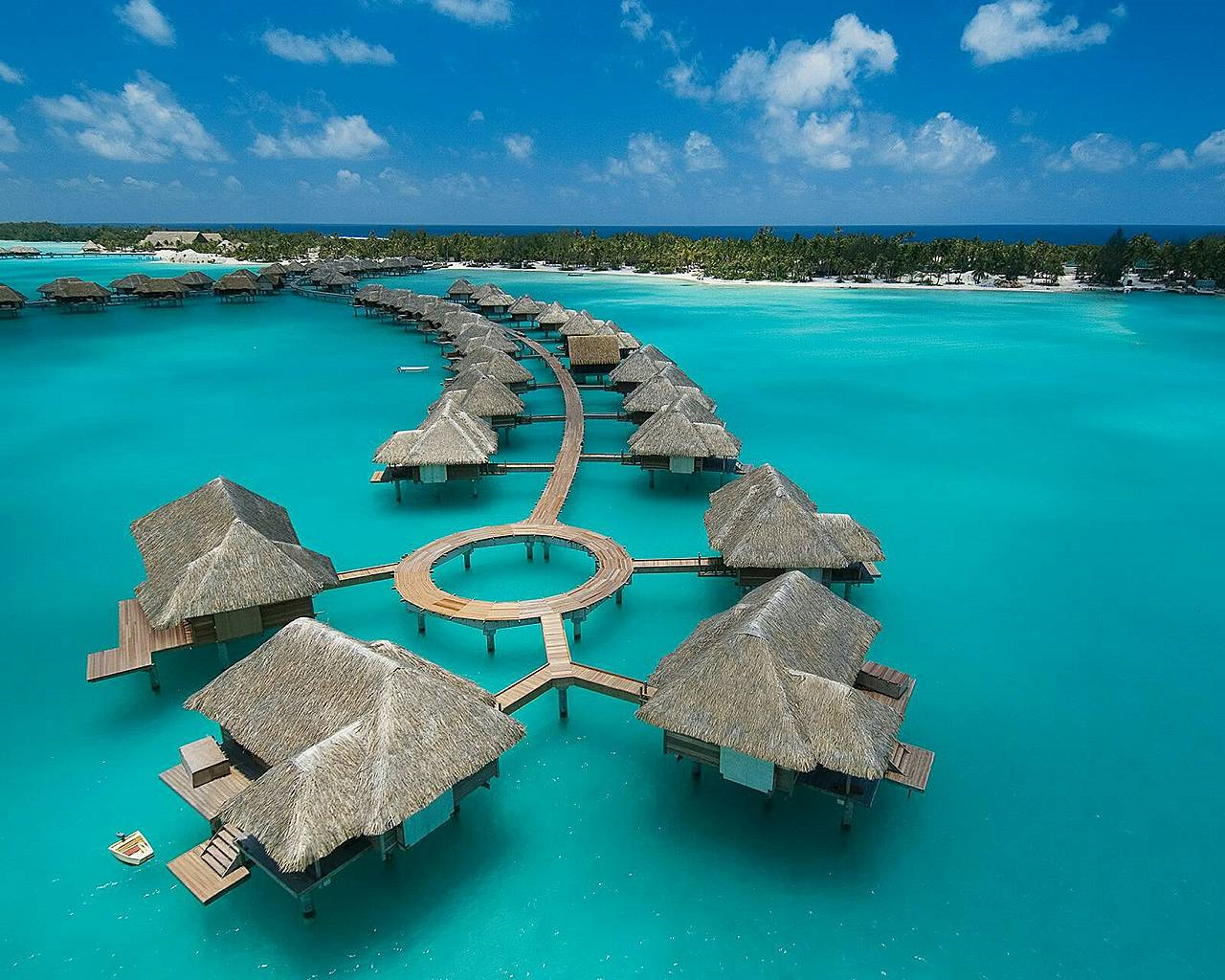
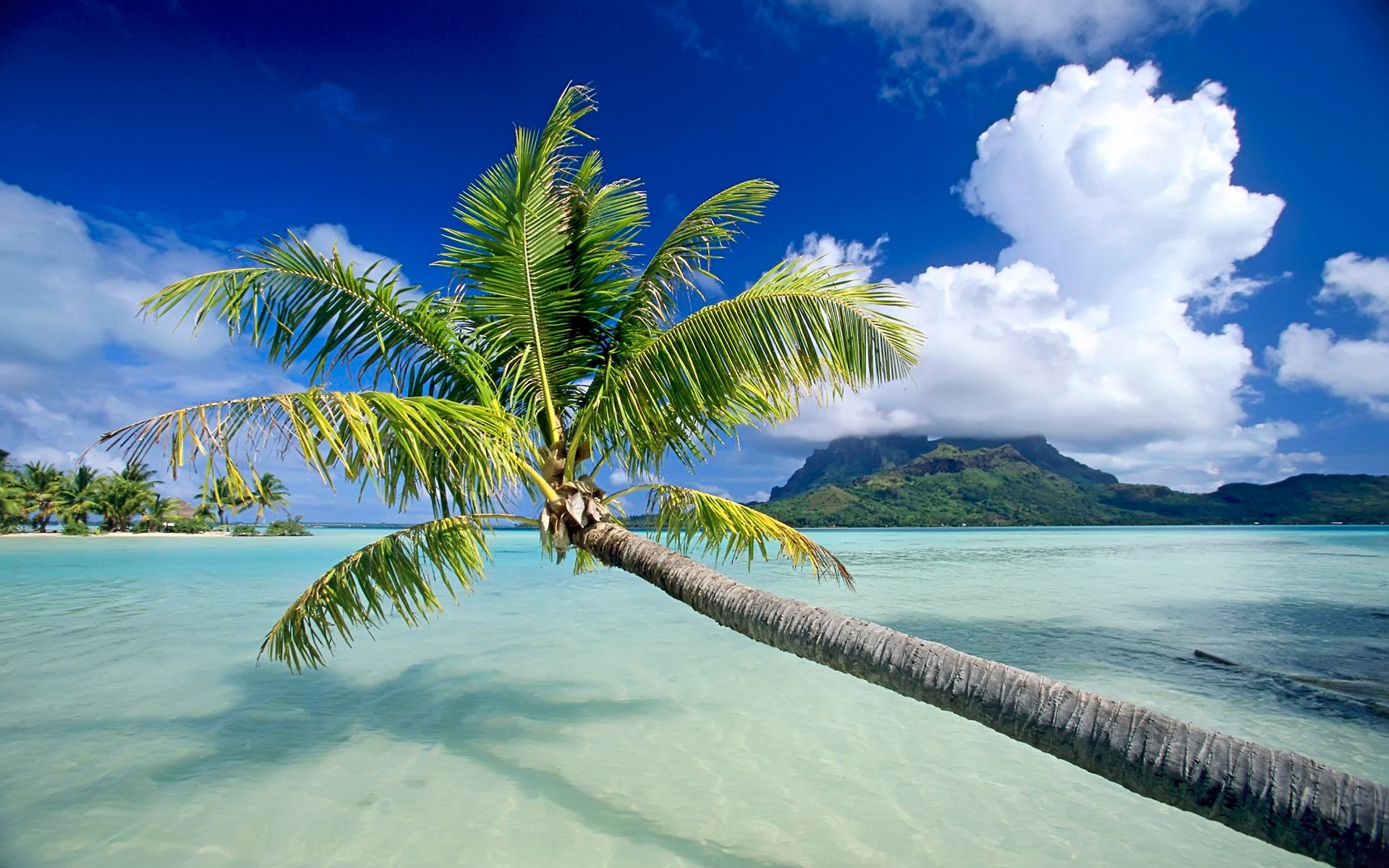
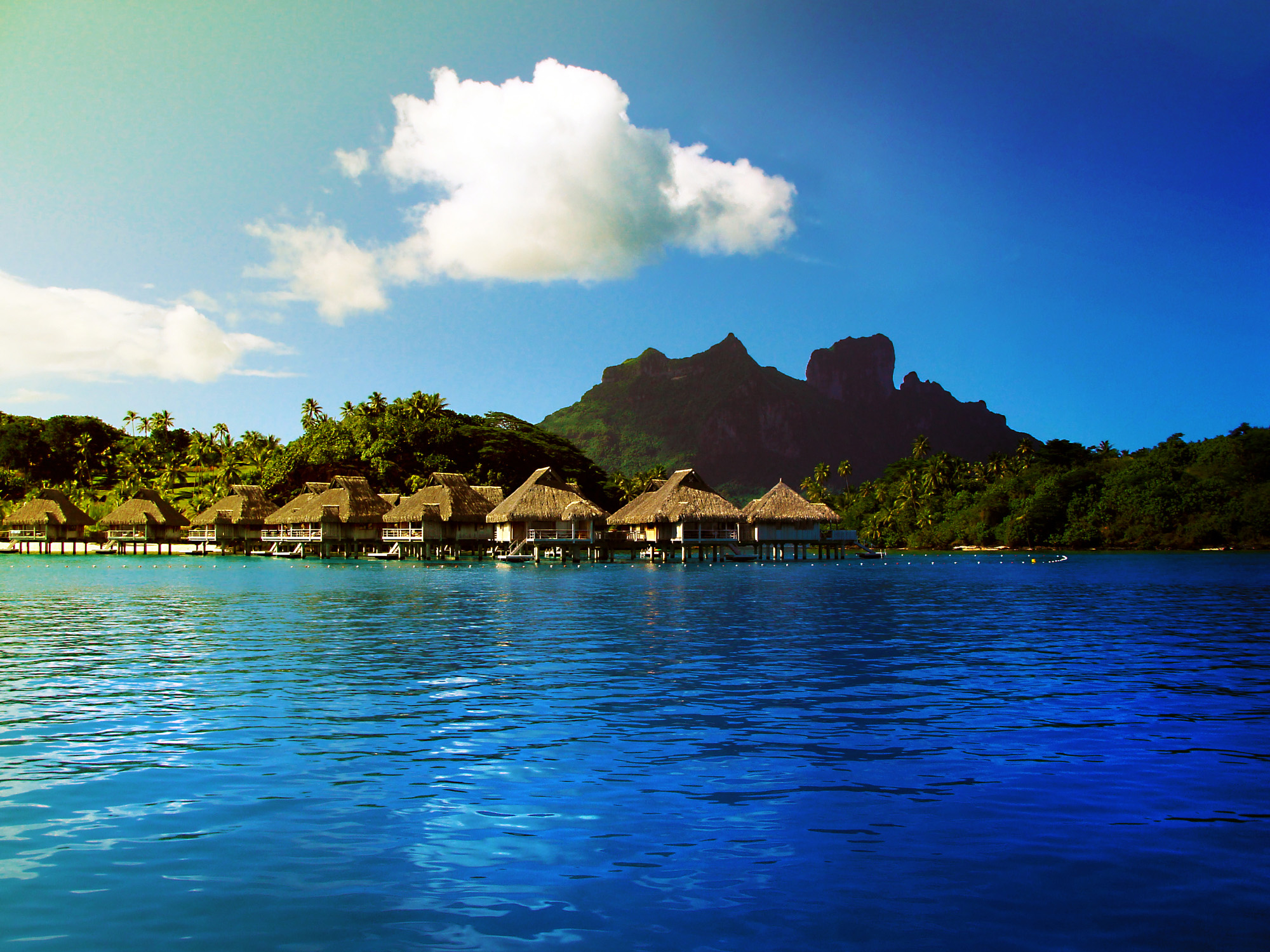
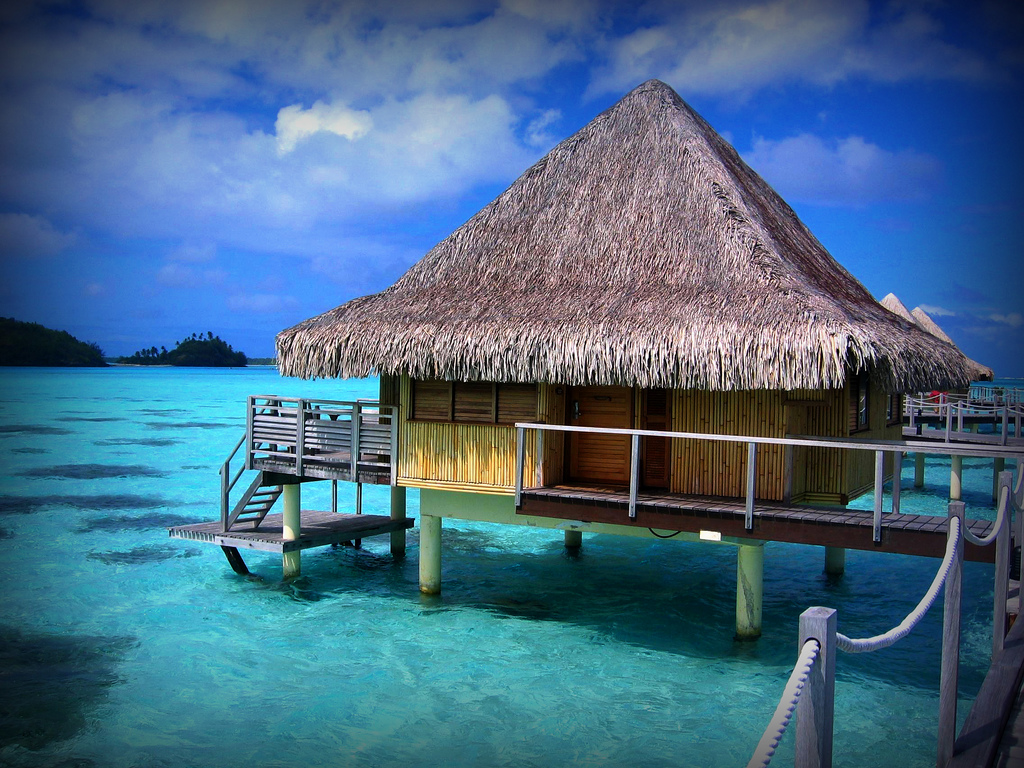
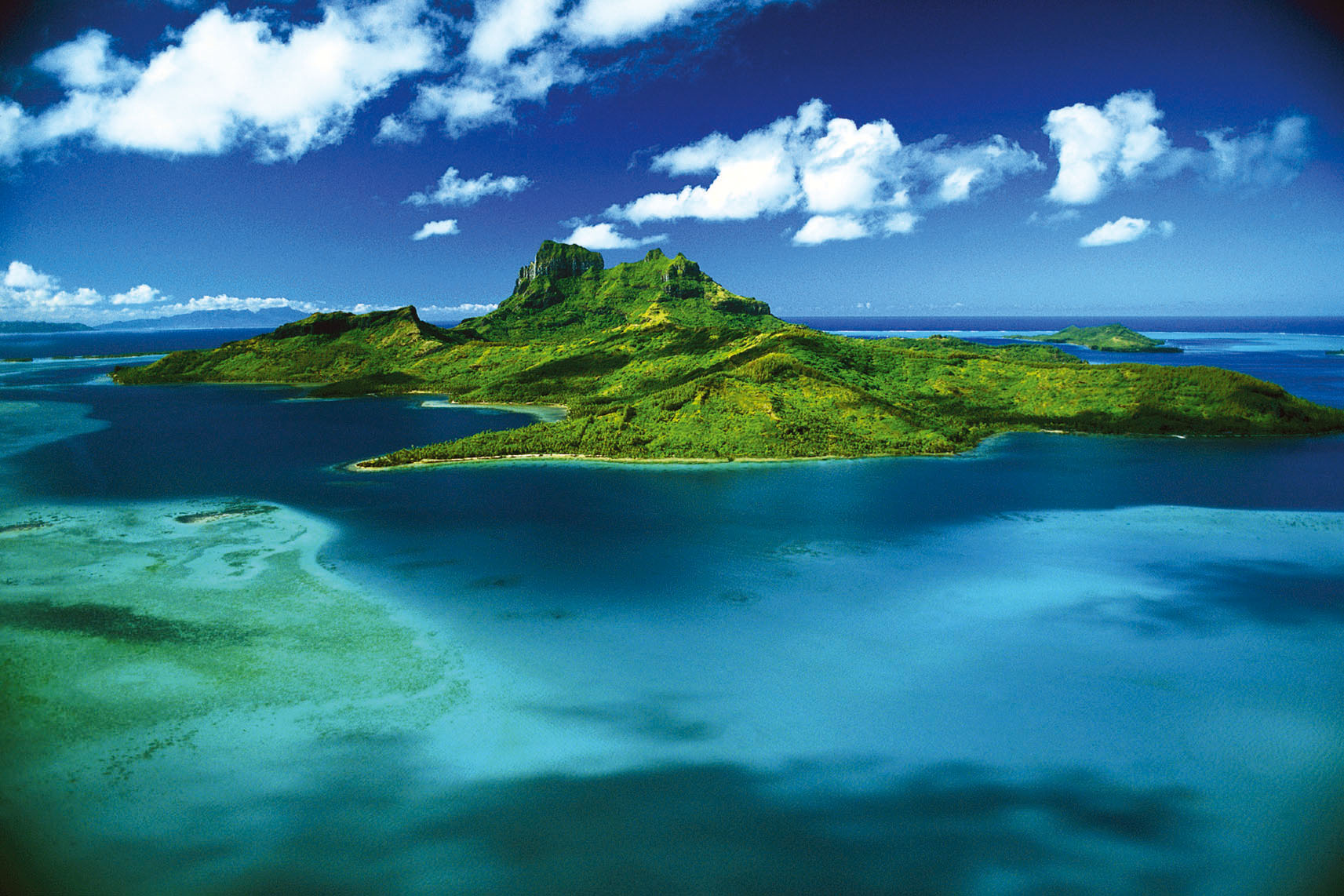
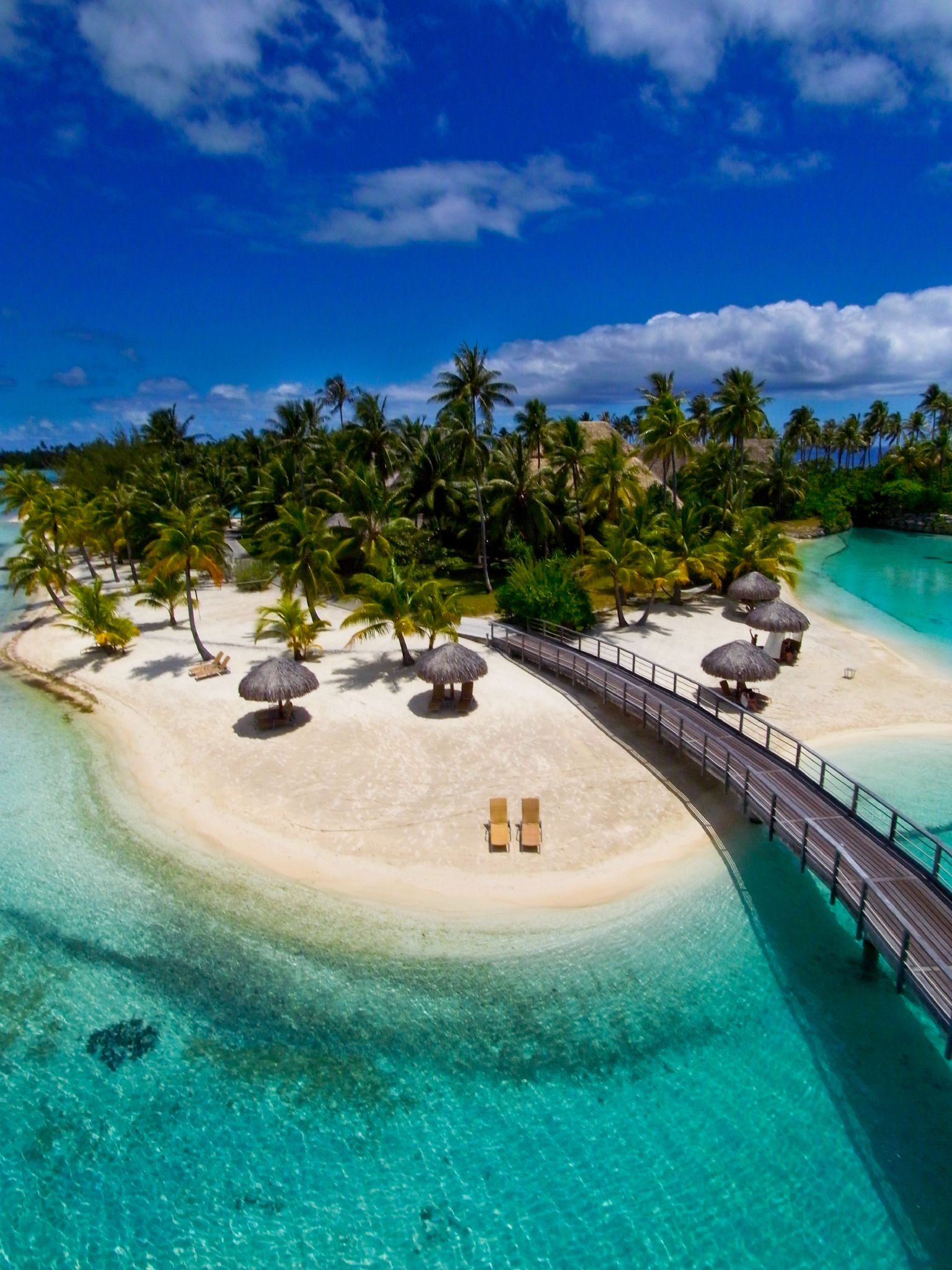
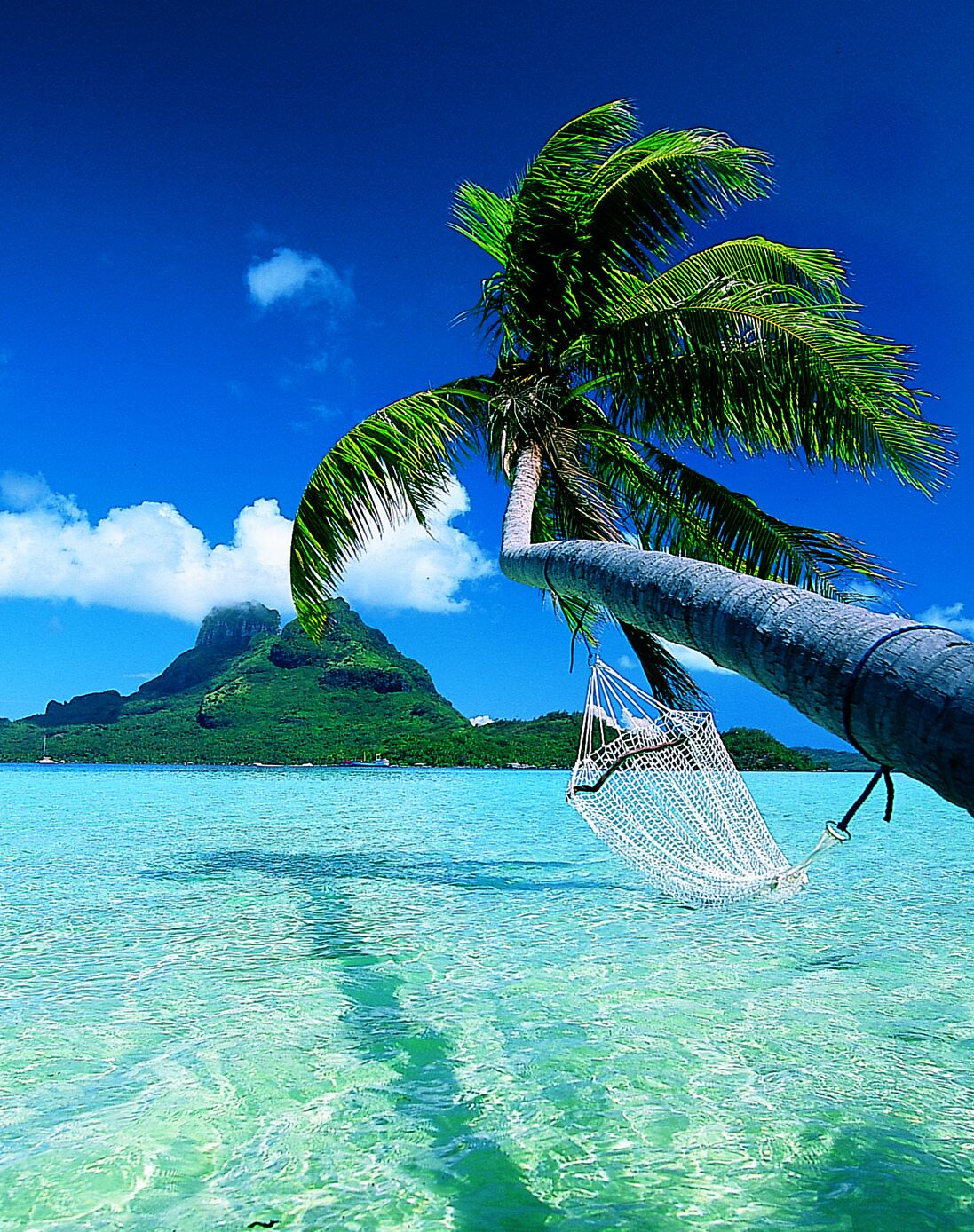
Officially a collectivity of France, the island of Bora Bora lies in the Leeward group of the Society Islands of French Polynesia. With its amazing reef, fantastic white sand beaches, and laid-back local population it is easy to see why Bora Bora is considered by many to be paradise on Earth. The island itself features an extinct volcano in the center and is surrounded by a lagoon and a barrier reef. Bora Bora is a tourist hot-spot and many resorts and over-the-water bungalows have been built on the island. The population of locals is just under 9,000 with Tahitian, French, and some English spoken. Visitors can enjoy world-class diving and snorkeling, as well as sunset catamaran cruises, fishing trips, and jet ski rentals. For discounted flights and hotels, visit our Travel Page and check out the coupon codes for many major booking sites.



Thursday, March 11, 2010
Strange Towers of the Third Reich
Thanks for visiting! Use the RSS feed or e-mail subscription to keep up to date on what's happening on this site.
Not just phallic symbols of power;
they actually served a practical purpose.
These concrete towers were unique AIR RAID SHELTERS of Nazi Germany, built to withstand the destructive power of WWII bombs and heavy artillery. Their cone shape caused bombs to slide down the walls and detonate only at a heavily fortified base.
Cheaper to build above ground than to dig bunkers, they were quite effective, as it was possible to cram as many as 500 people inside. Plus the "footprint" of such tower was very small when observed from the air, so it was very hard for the bombers to ensure a direct hit.

(photo credit: Ivo Schenk. This tower you can even visit)
First appearing in 1936, they were quickly dubbed "cigarette stubbs" or "sugar beet heads". Officially they were called Winkeltürme (Winkel Towers)- after their architect Leo Winkel of Duisburg. Winkel patented his design in 1934, and in the following years Germany built 98 Winkeltürme of five different types.

(photo credit: Norbert Hämmerling)
Hitler was quite impressed by Winkel's concept and blueprints, and ordered full engineering and production support. They were meant to be shelters for factory workers and railroad personnel, to be placed mostly in heavily industrial areas, such as Giessen.
Here is a cut-away view:

(image credit: Michael Grube, Lost Places.De)
Some towers could accommodate as many as 500 people, and consisted of several floors, twisted in a spiral:


(images credit: M. Niehues)
Every floor had some simple furniture:
(interior photos courtesy Michael Grube, Lost Places.De)

Entry was through a hatch door:

The shelter was secured with a heavy lock:


"The Winkelturm in Stuttgart, a Type 2, is in the Feuerbach rail area. The cone shape was designed to defeat bombing attacks by deflecting bombs off the top and sides, toward a reinforced area around the base. However, a Winkelturm of this type in Bremen suffered a direct hit by U.S. bomb in October 1944, which exploded through the roof and killed five people inside."


(images credit: A. Glasner)
Focke Wulf and even Daimler Benz factories got some towers, more than 34 were built around steel plants and rail centers, and quite a few were designated for the German Command itself.


(images credit: A. Glasner)
Cone shaped towers were complimented by the "Dieter" towers, hexagonal or somewhat mushroom-shaped:

Some towers had a flat roof, which was used as a platform for anti-aircraft guns and powerful searchlights.


Today these towers are often considered an eyesore, so the locals turn them into town museums, or even bus stops:

or they try to paint them into something cheerful:

I personally think that their weird and haunted look (combined with a bizarre monumental nature) make them good, though ghastly, reminders of the WWII past.

Sources and further reading: Third Reich Ruins, Luftschutz Bunker, Michael Grube, Lost Places.De
they actually served a practical purpose.
These concrete towers were unique AIR RAID SHELTERS of Nazi Germany, built to withstand the destructive power of WWII bombs and heavy artillery. Their cone shape caused bombs to slide down the walls and detonate only at a heavily fortified base.
Cheaper to build above ground than to dig bunkers, they were quite effective, as it was possible to cram as many as 500 people inside. Plus the "footprint" of such tower was very small when observed from the air, so it was very hard for the bombers to ensure a direct hit.
(photo credit: Ivo Schenk. This tower you can even visit)
First appearing in 1936, they were quickly dubbed "cigarette stubbs" or "sugar beet heads". Officially they were called Winkeltürme (Winkel Towers)- after their architect Leo Winkel of Duisburg. Winkel patented his design in 1934, and in the following years Germany built 98 Winkeltürme of five different types.

(photo credit: Norbert Hämmerling)
Hitler was quite impressed by Winkel's concept and blueprints, and ordered full engineering and production support. They were meant to be shelters for factory workers and railroad personnel, to be placed mostly in heavily industrial areas, such as Giessen.
Here is a cut-away view:
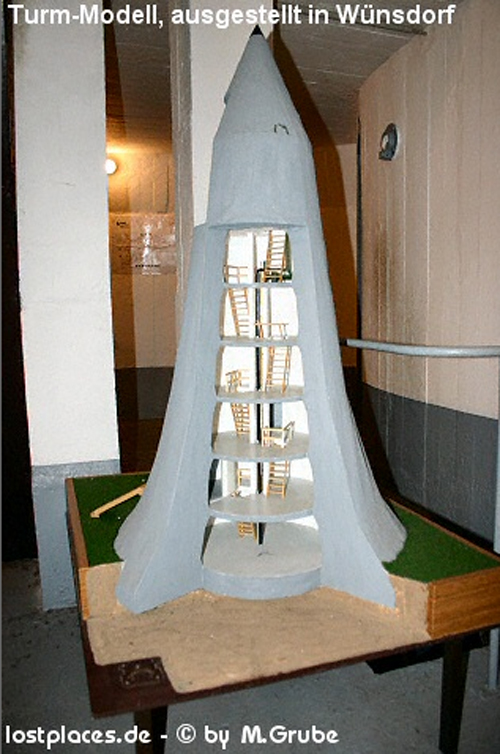
(image credit: Michael Grube, Lost Places.De)
Some towers could accommodate as many as 500 people, and consisted of several floors, twisted in a spiral:
(images credit: M. Niehues)
Every floor had some simple furniture:
(interior photos courtesy Michael Grube, Lost Places.De)

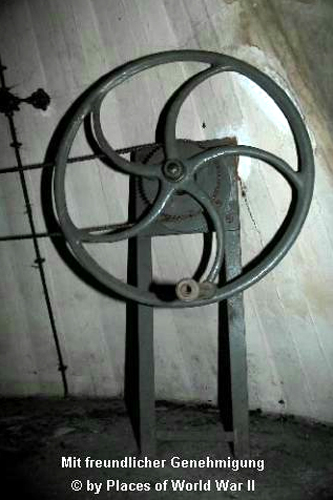
Entry was through a hatch door:

The shelter was secured with a heavy lock:

"The Winkelturm in Stuttgart, a Type 2, is in the Feuerbach rail area. The cone shape was designed to defeat bombing attacks by deflecting bombs off the top and sides, toward a reinforced area around the base. However, a Winkelturm of this type in Bremen suffered a direct hit by U.S. bomb in October 1944, which exploded through the roof and killed five people inside."
(images credit: A. Glasner)
Focke Wulf and even Daimler Benz factories got some towers, more than 34 were built around steel plants and rail centers, and quite a few were designated for the German Command itself.
(images credit: A. Glasner)
Cone shaped towers were complimented by the "Dieter" towers, hexagonal or somewhat mushroom-shaped:
Some towers had a flat roof, which was used as a platform for anti-aircraft guns and powerful searchlights.
Today these towers are often considered an eyesore, so the locals turn them into town museums, or even bus stops:
or they try to paint them into something cheerful:
I personally think that their weird and haunted look (combined with a bizarre monumental nature) make them good, though ghastly, reminders of the WWII past.
Sources and further reading: Third Reich Ruins, Luftschutz Bunker, Michael Grube, Lost Places.De
Subscribe to:
Posts (Atom)